…but we’re members of the ACLU in spirit!

Official confirmation of our donation of $650. Thanks again to everyone who came out and contributed, and to our matching donor whose separate donation of $350 brought us to $1000 from that event!
…but we’re members of the ACLU in spirit!
Official confirmation of our donation of $650. Thanks again to everyone who came out and contributed, and to our matching donor whose separate donation of $350 brought us to $1000 from that event!
Stuart Bousel wraps us up with a year-end wrap up.
Well, here we are again.
Another year has passed here in the Bay Area theater scene, and while many are saying 2016 was a cursed year, I personally found it to be a rather relentless year of change, challenge, growth, and ultimately: reward. Which doesn’t mean I’d do it all over again, but I have a hard time just writing it off either. For better or worse, and for the most part it’s been better though maybe not immediately apparent how so, a lot of stuff that kind of needed to happen, happened this year, and I’m grateful. I think I’m a smarter, stronger, more centered person, and a superior artist to who I was. Which isn’t the same thing as happy, but there’s a price for everything, right?
One of the many things that happened this year was that I branched out, or rather, I branched back out, expanding my participation in the form beyond the writer/director status I had more or less relegated myself to (and embraced) to also include acting, once again. The result was being cast in two shows, one of which, the Custom Made Theatre Company production of CHESS, became so time consuming I actually didn’t see a play by anyone else from August through November of this year. Even then I only just managed to catch Rapture Blister Burn at Custom Made, and if I wasn’t a staff member there it is debatable if I would have done so. I missed all but two nights of the SF Olympians Festival, and one of the two I managed to attend… was my own. That 2016 has been a largely successful year for me on the theater front is undeniably true, and no where is it more apparent than now, writing the Stueys, and finding I have a mere 26 shows to consider. That may seem like a lot, but usually it’s more like 40-50. The fact is, I was at the theater just as much if not more so than usual, but in 2016 the show I was most often at was one of my own.
Many things finished their course this year, including Theater Pub and DIVAfest, two organizations that were quite energy and time-consuming for me, and were indeed the equivalent of part-time jobs (though only one of them was I actually paid for). I’ve debated if the STUEYS should do likewise and end their reign of terror, but I rather enjoy publishing a personal Best Of list, if only to remind people, annually, that I do in fact like quite a lot out there. And because if there’s one thing I’ve come to understand about the Bay Area Theatre scene over the years, it’s far more diverse than most of the accepted press is willing or able to agknowledge, and so an additional voice is not only welcome, but necessary. Hence, here we are again, with all the usual caveats that no awards here mean anything beyond my personal admiration for the named artist, and that no rules apply to this process aside from my own personal whimsy when it comes to determining categories and recipients, and my own personal promise to not give myself or anything I creatively worked on an award because my vanity is a mere 7 out of 10.
So without further ado, the Stuart Excellence In Bay Area Theater Awards 2016, or the SEBATA, or The Stueys.
To all my friends and frenemies in the local rat race we call Art, let’s all do it again next year. But better. And maybe a little more paced out. Cause I am tired and I know I’m not the only one.
The Peter O’Toole Award For General Awesomeness: Jay Yamada
Do I really need to talk about how cool Jay Yamada is? I hope not. But then, if you haven’t worked with him, you might not know. The man is a saint, truly, and even better- he’s an artist, an excellent stage photographer who actually understands how to work with stage lighting and capture moments in shows you could never reproduce as posed shots. The Mohammed Ali of stage photogs, Jay is weaving around your actors at a final dress like a dancer, camera clicking away and sometimes inches from their faces, and yet amazingly unobtrusive. At the end of the night you know you’ll be walking away with at least 40 usable portfolio shots and press photos, and what’s more- your actors and designers will too, because Jay knows to get all that stuff and capture it in use, the way it should be captured. He often does this for dirt cheap or free if you’re a small company, and that’s just cool, providing the level of theater that needs it the most a touch of professionalism and gloss it might not otherwise get.
Best Thing I Saw But Didn’t Actually Like: The Lion (ACT)
I am a white guy who enjoys stories about white guys and acoustic guitar and I do not and will not apologize for it because some of that shit is gold. But man- you know a show is AGGRESSIVELY CAUCASIAN when even I am like, “Wow, this shit is white.” Still, Benjamin Scheuer does for white straight guys who make it through cancer what W;T did for white women who don’t, and if it’s a little Beaches in the mix to boot, all the better. His music is excellent, if utterly innocuous from the sampling in the show (I coined the term “innocurock” after seeing it), and he tells his story well, sincerely and without self-aggrandizement, owning where he comes from with everything from the Trunk Club wardrobe to the Lisa Loeb (™) brand bohemian apartment set, and it all works because the point is- even these guys die. Even these guys face a moment where they will be stripped of dignity and confronted with their insignificance and find out who they really are. When I say I didn’t actually like the show it’s because I found it low-stakes (I mean, we know it turns out okay, he’s sitting there performing it), a little saccharine (nobody in Ben’s life fails to find their place in his heart), and a little too polished (don’t tell us you were scared, Ben, show us, compromise that golden boy image you effortlessly project). But all that said, I found myself thinking, “I like this guy. He’s a good performer and a good spirit. I’m glad he’s okay. I hope he uses all this incredible talent and this second chance at life to make some really good art some day.” The Lion was, for me, all about potential- and realizing you have some. And that you shouldn’t waste it. Cause that clock is ticking, even if you’re a good looking heterosexual white kid whose life has been non-stop options (which, by the way, may actually make it easier to piss away your assets than someone whose daily existence is a reminder not to blow their shot), and I sincerely hope this was the prologue to something bigger in scope, and even better in execution.
The Best Thing I Saw Sans Qualifications: Colossal (SF Playhouse)
Against all odds, I loved this show. I say against all odds because I could care less about football. I don’t even hate it. I just don’t care. It’s like a thing that matters on another planet to people who in turn come from an even farther one from my daily reality and I just don’t get it. But man do I get falling stupidly in love with terrible people, hot gay sex, and the appeal of that which will probably destroy us, and playwright Andrew Hinderaker’s downright nasty, unapologetic, semen and sweat soaked script is one of the edgiest meditations on the mass appeal of self-destruction and its direct link to our urge to fuck one another that I’ve encountered in years. Beautifully directed by Jon Tracy, with some excellent performances (particularly the central character played by both Jason Stojanovski and Thomas Gorrebeeck, each bringing a distinct aspect to their interpretation of the role that highlights the disparity between who we are and who we perceive ourselves to be), the show managed to take some truly commendable risks and for the most part they all paid off in spades (the countdown clock behind the action at all times- brilliant! the relentless football drills- gorgeous!), somehow tricking me into accepting football not only as something people might genuinely want in their lives, but would like… make art about. And really good art at that.
Best Ambitious Failure: Cage (Performers Under Stress)
As usual, I feel like I first need to remind folks that I love very little as much as I love a Good Ambitious Failure. In fact, if pressed, I’d much rather watch a GAF than a Well Made Play any day of the week, because the former is much more likely to surprise me and one of the reasons I head to the theater is to be surprised. I feel like Performers Under Stress sort of specialize in the GAF, and Scott Baker’s continued forays into the realms unexplored and frequently ignored by the general theater community are worthy of a Stuey themselves, but this show in particular is a standout amongst their work that I have seen. Tar Gracesdóttir’s script is witty and interesting, though it borrows so heavily from the Joe Orton comedies that clearly influence it that it runs the risk of predictability and it devolves in to the sort of Facebook Status Update liberalism I’ve grown, as a liberal, to really detest. Still, Baker’s direction kept it moving, and Val Sinckler’s performance in the lead provided the perfect dose of skeptical every person required to make an otherwise alien group of characters at least contextually believable. It’s Valerie Fachman’s humane and sympathetic turn in a supporting role, however, that provided the evening with heart, and made me want to revisit the script again, and think about the production I’d just seen. Was it a perfect night? Far from it. But it got under my skin, and frankly that’s always the harder battle to win with an undeniably jaded audience member like myself.
Best Addition To The SF Theater Scene: Lily Janiak (SF Chronicle Critic)
Those of you wondering if this is me kissing ass in a very public way, rest assured, part of what I love about Lily as a critic is that she knows there are times I think she couldn’t be more spot on, and times I think she is full of pretentious nonsense, and my respect for her is in a large part due to my ability to express, publicly and privately, both of these perspectives at any given time, with the assurance that neither stance will influence her critique of my work, which has ranged from super flattering to just a shade less complimentary than that time the Guardian negatively compared my work to a Star Trek convention. Coming back onto the scene just a few months after she told me she was done with criticism, now bigger and bolder than ever, Lily has been shaking up the local theater scene in ways both admirable and terrifying, and I for one couldn’t be happier about it. Though she’s not my favorite local theater critic, she’s certainly one of my favorite local thinkers, and while some people will claim her importance as a wrench in the way we usually do things around here is the whole being female part, I would claim it’s got a lot more to do with being under 40 and not afraid to ask questions, particular of our very comfortable old guard who could use a little pointed poke in the grey matter now and then. If theater has a future in the Bay Area, it’s time we start getting some next generation (or really, this generation) perspectives and I can’t applaud the Chronicle more for going with someone exciting and fresh and smart and willing to put her mind out there. It’s not about kicking out the old, whose mentorship and legacy are invaluable, but we’re long past the point of making a place at the table for the new and this was an important step in the right direction. How excellent, as a director, to glance at the critic sector of the audience on opening night and see someone stuffing their bike helmet under the chair amidst that sea of venerable, adored, and largely white, gentlemanly heads. I might not always like what she’ll have to say, but then I can’t always predict what that’ll be either, and that, one artist to another, is delicious.
Best Synthesis of Tech and Action/Best Director: Cole Ferraiuolo/Maggie’s Riff (Faultline)
Look, I’ll be honest (cause that’s how I roll these days): I think Jack Kerouac sucks. I think he’s a shitty writer, and from what I’ve read he was a craptastic human being too, and yes I realize I’m basically telling you to revoke my San Francisco citizenship and my Reed College diploma. Jon Lipsky’s play didn’t do a thing to change my opinion, despite excellent performances from Paul Rodrigues, JD Scalzo, Nicole Odell, Rich Lesnik, and if anything it reinforced my assumption that having sex with Kerouac was probably like having sex with a bowling alley only less erudite, but what it did do was foster a new admiration for Cole Ferraiuolo’s abilities as a director, particularly in his ability to synthesize tech aspects of the show with the text aspects of the show to create an aesthetic whole that seemed almost seamless. In particular, the integration of shadow affects, by Alisa Javits, into the narrative highlighted the tension between truth and fiction, perception and reality, legacy and legend that provide the intellectual nut of the show. The piece felt like a fever dream, poetic and important, even if only to the dreamer, and the pacing, which is what kills so many shows for me, was pitch perfect from beginning to end.
Best Five Minutes: Justin Gillman and Cat Luedtke in Middletown (Custom Made Theatre Company)
Will Eno is a mixed bag for me. For everything I like and admire, from the language to the ideas, there’s a thing I’m twiddling my thumbs at, there’s a moment I’m wondering how something so bland can somehow inspire such passionate praise. Middletown epitomizes this for me, and is why if someone asked me “where to begin” with Eno, I would send them here, with the caveat of, “it’ll leave you unsatisfied- which I think is how it’s supposed to leave you- which means I think you’ll have successfully gotten it and him? I don’t know. It’s not really my thing. Even though it kind of is.” That said, my single favorite five minutes of theater this year was in the Brian Katz directed production at Custom Made Theatre Company, and it happened in the second act, when Cat Luedtke’s doctor encounters Justin Gillman’s lunatic and decides to help him out with some birthday drugs she “spills” from the supply of pain killers she apparently just wanders around with. If Brian excels at anything as a director, it’s a kind of stoic naturalism, and in a scene between two such archetypes, it’s his light hand that allows for two excellent actors to soak in the relationship and find the nuances that turn this five minute scene into a stand-alone one-act I’d award Best Short Play to if I could. No where else in the production was that theme of the extra-ordinary ordinariness of things better realized, and the moment was at once sad and funny and romantic and real, like a treasured scene of an early ‘aughts indie film I would have, at another point in my career, played on repeat to actors insisting “that’s how you do that.”
Best Actress In A Thankless Role: Melanie Marshall, Peer Gynt (ArtistsRepSF)
There are a lot of thankless roles out there, male and female, but women more often than not, through sheer numbers, end up in parts that, while not necessarily bad parts, are still just kind of thankless. For every regal queen role, or unrepentant murderess, or inspiring historical figure, or mold-breaking heroine who takes center stage or at least holds her own on the supporting side, there are like three times as many handmaidens, best-friends, random sexies, and blandly supportive mothers or love-interests. Solveig in Peer Gynt falls into the last category, though too his credit Ibsen attempts to give her some personality, he just also sort of forgets about her for 2/3rds of the play after she’s introduced, bringing her back at the end once his hero has learned an important lesson- one she embodies, thus rendering her not just a personified concept, but a kind of reward. That Solveig has a little more grit to her in the Artists’ Rep adaptation of Peer Gynt is no doubt partly due to Oren Steven’s revisioning and direction, but it’s hard to imagine anyone having brought to the role what actress Melanie Marshall was able to bring through a unique combination of earthiness and no bullshit deadpan. Often times Solveig feels beautiful and forgiving, but because she has to be (that’s how she was written to be). Melanie made it clear her Solveig was making it work as a choice- her choice- and that nobody, starting with Peer, should take it for granted. As a long time fan, for all its flaws, of the original work, it was impossible not to be charmed by this fresh take on the character, and even wish that a full spin-off revisioning, WICKED-style, was in the works somewhere, preferably with Melanie at the helm.
Best Surprise, The Big Hot Mess (DIVAfest)
To know Catherine Debon is to know a true San Francisco original, though Parisian in origin (but then, true SF Originals are almost always from somewhere else, right?). A femme fatale come to life, a dancer and performer, a writer and thinker, Catherine has been creating unusual and challenging performance work in the Bay Area for years, but with The Big Hot Mess, directed by Amanda Ortmayer and featuring Kevin Copps in a supporting role, she gave us something unique and unusual even for her. Part film noir, part performance art, this exploration of time and agency, and the relationship between the two, made use of duct tape and wall-clocks, movement and voiceover, one slinky black dress and one fedora to illustrate how our personal sense of control over our lives slips as we age and find ourselves progressively written out by the world around us. As the guy who had done some publicity work on this piece, I knew to expect something heady and stylish, but what I wasn’t expecting was to be utterly and thoroughly delighted by the end product, for it to be by turns elegantly self-aware and comically absurd, yet at its core a heroic journey, a depiction of one woman’s willingness and ability to stand up for what was right. A total inversion not only of the noir genre, but the medium of performance art in general, The Big Hot Mess was anything but, and the only time this year I found myself saying, “Yeah, I know I was paid to tell you to see this- but you really really should see it. It’s so good!”
Best Spirit: Terra Incognita: Through The Waves (DIVAfest/UpLift Physical Theatre)
I feel like it’s already a bit of a legend, how on opening night of this piece, created and performed by Juliana Frick, Hannah Gaff, and Nicholette Routhier, the soundtrack didn’t work and the show went on anyway, with all three women performing in absolute silence to an awestruck theater full of people wondering how you could pull off a movement piece without the music and soundscape it had been created to. As we sat rapt for thirty minutes, watching them tumble and lift and dance and roll with only the patter of their feet and the slap of their skin against the lone piece of scenery, a table, to accompany them, I remember thinking, “This is what it means to be an artist- and to be a small theater artist- this right here.” While a bigger company would have canceled the night, refunded the tickets, and maybe should have, that was not only not an option for these women, but ultimately an asset. When you’re in the business of making art that is raw and real, you know you can’t back down because the tech craps out. When your art gets better because you didn’t back down, that’s when you know you’re the part that’s raw and real.
Best Designer: Carlos Aceves, Scenery For The Awakening (The Breadbox)
The Breadbox’s production of The Awakening, adapted by Oren Stevens and directed by Ariel Craft, earned a tremendous amount of attention this past year, including a truckload of TBA Awards and critical praise, and all of it was, unquestionably, deserved. I could heap more praise myself, but decided that in the spirit of the Stueys, which try to highlight some stuff left off the other Best Of lists, I thought I would call attention to what was one of my favorite aspects: the simple and yet evocative set design that captured beautifully the turn of the century Gulf coast community in which the action was set. One of the more transformative sets I’ve seen in the EXIT Stage Left, Carlos Aceves’ combination of boardwalk and driftwood echoed with Louisiana elegance and bygone nostalgia, evoking not just the sea but the beach, specifically, and the cultures that grew up around The Shore. From the knots in the wood to the knots in the hammock, there was a graininess to it all that practically bled sepia-toned photographs, and sucked you into the world that had to be real before any of the conflicts happening inside of it could truly be understood in context. A precise blend of conceptual and literal, the set accented perfectly everything else the show so adeptly executed.
Image That Will Stay With Me The Most: Mikka Bonel/Amy Sass (A Whale’s Wake, The Flightdeck)
Amy Sass is an admirable theater artist for a number of reasons, but if I had to pick one, it’s this: girlfriend does not compromise her vision. Sometimes this is a wonderful thing, and sometimes it’s a questionable thing, but for what it’s worth, we don’t do art so the audience will be indifferent about it and Amy Sass seems to not only get that, but embody it. There was a lot about her play A Whale’s Wake that I admired, and some I sort of rolled my eyes at, but if I had to pick one moment from any show that I saw this year that best epitomizes this year it’s without doubt from Amy’s personal spin on the domestic drama, and that oldest of tropes in the domestic drama trope bag: the reluctant mother giving birth. In this case, because it’s Amy, she gives birth during a flood, as she’s swept out to sea, and said baby sort of ballet dances away on its umbilical cord, before said cord is severed by a Dude Who Fixes Everything trope. I know this sounds ridiculous, and it was, but somehow, thanks to Amy’s direction, and Mikka Bonel’s icy but graceful performance as the mother, it also worked, and seared itself into my imagination forever. What is life if not the wondrous and terrible moment of seeing your newborn hoisted out of you by forces beyond your control?
And so, there you go. Another year, another list. Hopefully you found it as amusing to read as it was for me to write.
Now, as I sit in the living room of my new apartment (I moved in October of this year, just one of many difficult changes that made me better), tying all this up, I suddenly find myself thinking that while in some ways I flew a little more under the community radar than usual this year (no TBA Award nominations, and I skipped the conference; lower attendance of shows than usual, and more stepping away from administrative roles than times past; and I went to virtually nobody’s parties), I still directed my favorite play, John Guare’s Six Degrees of Separation at Custom Made, had the honor of having my play Adventures in Tech directed by Allison Page at PianoFight, and ended the year directing the American premiere of Clive Barker’s gorgeous Paradise Street at the EXIT Theatre. A show of mine was done in Chicago, I mounted a collection of short plays about a pop star I idolize, Rob Ready slew another llamalogue I wrote, I had a reading in New York, I built a new works development program, I worked with awesome artists in a variety of ways, and I sang in front of paying customers for a month solid and nobody threw anything at me. Not every moment was perfect but in many ways, it was actually a bumper year as far as me doing what I wanted as an artist, though somewhat ironically, I also felt a little more on the outside of the community, for reasons I really can’t quite explain. At the back of my head, of course, I recognize it’s probably got something to do with having followed my own bliss a bit more whole-heartedly, un-appologetically, and occasionally at the sacrifice of passionate obligations and social politicking that at another point in my career would have called the shots more. I de-friended more of my fellow theater artists this year than ever before (albeit mostly due to the election), while at the same time expanding my collaborative circles exponentially, and though I suspect my approach to my own trajectory has always been complex if not outright paradoxical (can one be as diplomatic as I aspire to be, while also holding their integrity as close to the core as I also aspire to do?), I suppose what’s changed is that I’m no longer fighting that intrinsic tension, but rather embracing it. It’s about recognizing that everything is a mixed bag, including me, including everyone else, and sort of shrugging at the people who can’t accept that (or me) and letting them learn that without feeling the need to personally educate them- or apologize for not living up to their idea of what and who I’m supposed to be. Not everything is going to go according to plan, not everything battle is going to be won, not everything is going to be to your standards, but that’s okay. And also how it kind of has to be. Accept it, celebrate it, or let it go and celebrate that, but don’t let it stop you. If there’s one thing 2016 taught me, it’s that: don’t let it stop you. And don’t wait for people to catch up.
The right people always will.
Editor’s Note: In an effort to get this out before the end of the year, numerous grammatical and spelling mistakes have no doubt been made, and as such, will be edited in the future in an effort to uphold some kind of standard.
Marissa Skudlarek gives us one more look at the Glamorous Life!
Nearly seven years ago, on Martin Luther King Day of 2010, I attended a staged reading of Euripides’ Cyclops in a crowded bar on the shady side of Nob Hill, and my life was changed.
I was very young then – young enough that life-changing events could still happen to me. I was a late-blooming 22, a virgin who had never gotten drunk to the point of vomiting. Nor had I ever had one of my plays produced in San Francisco, or acted in a show here, or translated a play from French, or been invited to write regularly for a website, or, or, or… I was shy and nervous, masking my insecurity with arrogance and bravado. I think, sometimes, that I must have been completely insufferable.
But Theater Pub welcomed me in, and, indeed, helped me grow up. Within two months of Theater Pub’s founding, I had drunk too many glasses of Spanish red at the Café Royale, and then thrown them up into my bathroom toilet. Within four months, I had lost my virginity. Within eight, I had had a play produced in the inaugural edition of the Pint-Sized Plays – the first time anyone in San Francisco wanted to produce my work. And then came acting, and producing, and translating from French, and meeting the woman who would direct a full-length play of mine, and writing this column for over four years, and, and, and…
I have always thought of myself as kind of a loner, a skeptical soul with an aloofness at her core. I don’t have a group of “besties” with whom I text incessantly; I know what Groucho Marx meant when he said he wouldn’t be part of any club that would have him as a member. But it is inaccurate to think of myself as such a lone wolf – I am not always so isolated. Under the right circumstances, I can be fanatically, doggedly loyal.
And Theater Pub caught me at just the right moment to provoke my lifelong loyalty. When it started, I had been in San Francisco for 18 months, struggling to make connections in the theater scene, and finding it a lonelier and more difficult endeavor than I’d anticipated. I liked Theater Pub’s goals and gestalt, but I also calculated that this organization was my opportunity to get in on the ground floor of something. In those days, it saddened me when Stuart and the other Theater Pub founders would say “Theater Pub was designed to be everybody’s side project and nobody’s band.” I didn’t have any other projects, you see, and I was desperate for a band of my own.
So – partly for lack of anything better to do, partly for careerist ambitions, but, more and more, for love – I started attending virtually every Theater Pub show. I brought innumerable people to the Pub as they passed through my life, failed dates and former co-workers and out-of-town guests. I experimented with my art, in a way that you can only do when you’re making theater in a bar and no one is getting paid more than $20. I sang rock songs, I wore reindeer antlers, I wrote silly poems and fake commercials. Eventually I became one of the “old guard,” sitting at a corner table and looking sidelong at the new wave of bright-eyed early-twentysomethings joining the organization.
So I saw how Theater Pub grew, and changed, and started a blog, and provoked controversy, and went on hiatus, and rebirthed itself. (We in San Francisco know that no startup can be considered successful until it releases Version 2.0, after all.) Alliances and relationships formed and shifted and disbanded. Though, at this time, let me give due credit to Stuart Bousel, at the helm of this for all seven years, and his partner, Cody Rishell, who diligently created promotional art for every Theater Pub show.
And now? I’ve written before that Theater Pub’s end is not to be seen as heartbreak or defeat. In 2017, there will certainly be moments when we think of Theater Pub with fond regret. But none of us are crying tears of remorse, or wailing “If only we’d fought harder, if only we could have saved it!” We’re all ready to let it go – if you were at our show on Monday, you heard the glee with which Stuart announced “Just 17 songs to go, and then I am no longer the Executive Director of this thing!” We’ve got the seven-year itch. All the cells in our body have renewed themselves, and so has the majority of Theater Pub’s artistic leadership. We all do have other projects we’re working on; Theater Pub is not our only band. It became a side project that demands a disproportionate amount of attention and energy.
As I said, that first Theater Pub show was incredibly crowded, standing-room only. I perched on the edge of the Café Royale pool table until the bar staff yelled at me not to. At the time, I envied the founders’ ability to start a new theater company that would draw such a crowd at its first-ever event. Only later have I come to realize that the difficult part is not creating a splash straight out of the gate: it’s keeping the organization going, keeping the crowds coming, for months and years on end.
Theater Pub’s end isn’t really a full-stop end, it’s more of an ellipsis or a line break. The Pint-Sized Plays will continue in the PianoFight bar; PianoFight itself will still be the artistic home for many of us and the place where the bartenders will always lend a sympathetic ear. We’re not leaving town or quitting the business. We will still be making art, using the skills that Theater Pub allowed us to hone.
Next summer, I will turn 30. And I already know that my thirties are going to be very different from my twenties, not just because of who will be in the White House, but because Theater Pub will no longer be an organizing principle in my life. But I will carry the experiences of the past seven years in me. I am less lonely than I used to be, less resentful, more calmly confident. When I was an awkward child and teenager, the wiser adults in my life looked at me and said “High school won’t be the best years of your life; college won’t be, either; you’re the kind of person who will only find her people in her twenties.” Despite all my skepticism and neuroses, I never doubted this. Despite this world, this decade, this life, a bunch of people got together in the most expensive city in the country and made theater in a bar for seven years.
Marissa Skudlarek is a San Francisco-based playwright and arts writer. Now that Theater Pub is over, keep up with her viamarissabidilla.blogspot.com or on Twitter @MarissaSkud.
Our former Executive Director tried to be all clever and get the donation to the ACLU in the name of San Francisco Theater Pub. He put San Francisco as the first name, and Theater Pub as the last name. Little did he know that apparently everyone who donates to the ACLU is on a first name basis with the org.
Still, we did a great thing. Thanks again, everybody! Because of you we raised $650 in one night, and because of our anonymous matching donor, the total was really $1000!

Thanks, one and all, for coming out to our big final event! We had a blast, and we raised $1000 for the ACLU!
And with that, San Francisco Theater Pub officially closes its production wing. Keep your eyes on the website for periodic updates and thoughts from our founders and staff as they continuing exploring the Bay Area Theater scene and beyond.
For updates and information on Saturday Write Fever, continuing at the EXIT Theatre on the second Saturday of each month, check out http://www.theexit.org/write/!
For updates and information on Pint Sized Plays, returning to PianoFight’s bar in 2017, check out http://www.pianofight.com/pintsized/!
And just in case we do come back — keep us bookmarked. Cause you never know. Stranger things have happened.
Happy Holidays Everybody!
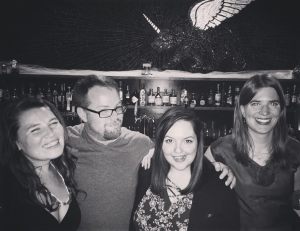
Happy Holidays from Meg, Stuart, Tonya, & Marissa.
A special announcement, just in time for the holidays!

PianoFight and San Francisco Theater Pub are proud to announce the latter’s marquee production, the venerable Pint Sized Plays, will return in 2017 with five all-new installments running throughout the year. Pint Sized Plays is made up of short plays set in a bar, written by locals. The only rule is that each play can’t run longer than it takes one of its characters to finish a beer. Pint Sized will happen in the PianoFight bar on Mondays at 7:30 PM in March, May, August, October and December, 2017. Tickets range from free to $30 donation, and can be reserved at www.pianofight.com.
As SF Theater Pub closes its doors this December, PianoFight will take over production and expand Pint Sized while keeping a few key ingredients of continuity. Meghan Trowbridge, who is currently the co-Artistic Director of Theater Pub, will continue with the new incarnation of Pint Sized as its Literary Director. “We’re accepting submissions right now and throughout the year,” says Trowbridge, who expects to see many of the voices that shaped Pint Sized return, but is also excited to find new talent. “This is a great opportunity for seasoned writers and brand-new voices. All are welcome and encouraged to submit!”
“Over the years, PianoFight Creative Company members, myself included, have been involved in past Pint Sized productions as actors, writers, directors, and musicians,” says PianoFight Artistic Director, Rob Ready. “On top of that, accessibility is important to us, and free theater in a bar is the single most accessible way you can see a play. SF Theater Pub’s tagline was, ‘Make it Good. Keep it Casual. Have a Beer.’ And we intend to keep that idea alive and flourishing.”
The first annual Pint Sized Plays took place at the Café Royale in August of 2010, and included short plays by numerous well-known folks in the Bay Area theater scene, including Stuart Bousel, Bennett Fisher, Jeremy Cole, Molly Benson, Karen Offereins, Marissa Skudlarek, and Megan Cohen. It also marked the first appearance of the Llama character, created by Elena McKernan and played by Rob Ready, who holds the distinction of being the only cast member to have appeared in all six installments.
Pint Sized’s expanded production schedule represents more opportunities for Bay Area residents to get involved in the arts in a fun, low-stakes environment. “The five installments could need around 40 different writers and directors, and will likely involve over a hundred actors,” says Ready. “We hope to fill these roles with voices who are new to the PianoFight community, and new to the Bay Area theater community.”
In years to come, PianoFight hopes to expand Pint Sized further to have an all new lineup run each month in the bar. “Pint Sized was one of the Theater Pub shows that toured to other bars, and it always did well in different settings,” says Ready, “so in the next few years, ideally, there is a new lineup every month at PianoFight, while different renditions of the show play other bars in the Bay Area.”
For now, Pint Sized Plays will return in 2017 with all-new installments happening in the bar at PianoFight, 144 Taylor St in San Francisco, every Monday at 7:30 PM in March, May, August, October and December. Tickets are free to $30 and can be reserved at www.pianofight.com. Bay Area writers wishing to submit a script to Pint Sized should refer to the full guidelines on PianoFight’s site.

Theater Pub’s final show is a way to give back to the community that’s supported us through the years.
Though we normally do a musical sing along, this year we’ve decided to open up the show for anyone who wants to perform a song and lead the audience in one more night of theater and revelry. This year’s line up includes Martin Bell, Andrew Chung, Cory Clar, Clare Eullend, Edward Garcia, Charlie Gray, Sara Judge, Dan Kurtz, Carl Lucania, Juliana Lustenader, Tonya Narvaez, Katie Nix, Rob Ready, Casey Robbins, Marissa Skudlarek, Leah Shesky, Gabbi Traub, Meg Trowbridge, Red Velvet, McPuzo and Trotsky, and Fat Chance Belly Dance!
The People Sing ONE NIGHT ONLY at PIANOFIGHT (144 Taylor Street):
Monday, December 19 @ 8:00pm
As always, admission is FREE, with a $10 donation suggested at the door. All funds raised will be donated to the ACLU.
No reservations required, but we get there early to get a good seat and enjoy PianoFight’s full bar and delicious dinner menu. Remember to show your appreciation to our hosts
See you at the Pub!
KING LEAR returns tonight!
Don’t miss this final production from Theater Pub!

Adapted and directed by Sam Bertken and featuring Valerie Fachman, Carl Lucania, Marlene Yarosh, Genevieve Perdue, Megan Briggs, Matt Weimer, Charlie D. Gray, Sam Heft-Luthy, Vince Faso, Karl Schackne and Kevin Glass, LEAR is the fitting swan song of sadness and silliness that will close the book on Theater Pub.
Catch “LEAR” only at PIANOFIGHT (144 Taylor Street):
Monday, November 28 @ 8:00pm
Tuesday, November 29 @ 8:00pm
As always, admission is FREE, with a $10 donation suggested at the door. No reservations required, but we get there early to get a good seat and enjoy PianoFight’s full bar and delicious dinner menu. Remember to show your appreciation to our hosts
See you at the Pub!
Theater Pub’s November show is another classic from the Bard’s folio. We’ve done comedies, we’ve done histories, we’ve done problem plays- and now, with the same love, speed, and healthy irreverence that’s made these productions instant classics in the past, we present William Shakespeare’s LEAR.
Adapted and directed by Sam Bertken and featuring Valerie Fachman, Carl Lucania, Marlene Yarosh, Genevieve Perdue, Megan Briggs, Matt Weimer, Charlie D. Gray, Sam Heft-Luthy, Vince Faso, Karl Schackne and Kevin Glass, LEAR is the fitting swan song of sadness and silliness that will close the book on Theater Pub.
Catch “LEAR” only at PIANOFIGHT (144 Taylor Street):
Monday, November 21 @ 8:00pm
Tuesday, November 22 @ 8:00pm
Monday, November 28 @ 8:00pm
Tuesday, November 29 @ 8:00pm
As always, admission is FREE, with a $10 donation suggested at the door. No reservations required, but we get there early to get a good seat and enjoy PianoFight’s full bar and delicious dinner menu. Remember to show your appreciation to our hosts
See you at the Pub!
Charles Lewis III checks in one last time.

My first time at the ‘Pub, Feb. 2010
“Livin’ here in this brand new world might be a fantasy
But its taught me to love
So it’s real to me
And I’ve learned that we must look inside our hearts to find
A world full of love
Like yours, like mine, like…”
– “Home” from The Wiz, Charlie Smalls, et al.
I’ve been drafting this final dispatch from the magical ‘Pub HQ since mid-September. I assumed it would be my final entry in December. Then in October, I got the e-mail saying we’d be wrapping up the regular columns by mid-November. With that in mind, I also decided to revisit the “SF Theater Pub – By the Numbers” spreadsheet I mentioned in my last entry. Like my fellow columnists, I’d planned for this to be a nostalgic look back at the last almost-seven-years as a maudlin playlist of break-up songs played in the background. But, as John Lennon said, “Life is what happens when you’re busy making other plans.” Also, “I am the Walrus,” but that’s neither here nor there.
I’m really glad I haven’t been on Facebook in over a year. I can only imagine how depressing it was last week. Admittedly, on Tuesday night I thought of logging onto Twitter – which I haven’t been on since August – and typing “Somebody just flipped/ My ‘Angry Nigga’ switch/ And the knob’s broken/ Stuck like that for four years, bitch!” But I didn’t do that, nor did I shed any tears. Part of me felt vindicated for this unfortunate proof that there is no “post-racial America,” but I was also disappointed. After finishing up at the SF Opera, I decided to head down to PianoFight.
Amidst the standing-room-only dour faces, I drank a Molson – yes, a Canadian beer – and looked at my phone to check Tumblr, the one social network I didn’t abandon this year. Most of the posts in my feed were what you’d expect, but I particularly took note of those attempting to reassure the worried that there are safe spaces from the dangers, real or imagined, that were trumpeted throughout this election cycle; that no matter what the next four years bring, there are places full of people supporting them and telling their stories; that there are sanctuaries where they could express themselves freely and be exposed to ideas from people who think the same. Kinda reminded me of a theatre company I’ve known for the past half-decade.
When the ‘Pub left the Café Royale in 2013, we were all quick to eulogize it. Leave it to Stuart see the bigger picture and point out that the ‘Pub wasn’t dying but evolving. He acknowledged how much the ‘Pub would be missed, but left us optimistic for what the future held. We’d already followed it “on tour” to the Plough and Stars bar, Borderlands Books, and the Bay Area One-Acts Fest; when it finally landed at PianoFight (and The Hall for a brief time), it was less a resurrection and more of a reawakening. This time is different.
We eulogized it then the same reason we do now: because it meant – nay, means – something to us all. As both San Francisco and its artistic communities changed before our eyes, “Theater Pub on Monday” remained a reliable constant for local artists struggling with forces beyond their control. It’s a company for which we have strong feelings and no shortage of memories. In February 2010 I went to the Café Royale to see a friend perform. By that December I’d appeared in shows about Oedipus, Oscar Wilde, HP Lovecraft, and was both co-writing and appearing in the first Xmas show.
When I asked myself what Theater Pub means, I couldn’t settle on any one thing. Hell, I couldn’t settle on 100 things. But it definitely included the following things. So before I look ahead, I hope you’ll indulge me in looking back over the past almost-seven years and picking a few things (some of which are viewable on the ‘Pub’s official YouTube channel) that illustrate just what I think Theater Pub means.
Theater Pub means arriving to see “an anti-Valentine’s Day show in a bar” (the ‘Pub’s second ever) and being greeted by Cody Rishell. He held a glass of wine in one hand and gracefully handed me the above program (featuring the logo he’d created) with his other hand. Classy as fuck, this ‘Pub thing. Were I forced at gunpoint to pick my favorite Cody piece of ‘Pub art, it would probably have to be…

Cthulu shan’t be denied his hors d’œuvres.
Theater Pub means I was in the company’s very first musical, a Faustian parable called Devil of a Time. I sang and played a kazoo. Footage of the show got me cast in a different musical by fellow ‘Pub veteran Evangeline Reilly. One of my three ‘Pub regrets is that we never went through with our plan to record the Devil of a Time cast album. I still have the songbook from the show and have used it in auditions. I also have the kazoo.
Theater Pub means there’s one company where I’ve acted in more shows than anyone else. I’ve actively tried to disprove this fact over and over again – hell, I figured Andrew Chung must have done more than me by now. I put together the “By the Numbers” spreadsheet in part to show that I couldn’t have done the most. The results conclude that… yeah, I’ve acted in the more shows than anyone else. I’ll be damned.
Theater Pub means watching a version of 2001: A Space Odyssey that includes the one thing Kubrick’s masterpiece truly lacked: the phrase “Fuck! This! SHIIIIIIIITT!!!!” shouted at full volume. The looks on the faces of the brunch crowd at The Hall were priceless.
Theater Pub means me losing my mind singing along to Jesus Christ Superstar, standing silent as everyone around me sings Rent, and leading the audience through songs from Tommy. Nobody does Xmas the way ‘Pub does Xmas.
Theater Pub means a four-year-old writer got to debut her first work for our edification. It had Megan Trowbridge applying several band-aids. We are all richer for the experience.
Theater Pub means showing up in a toga to be greeted by a lot of bearded ladies.
Theater Pub means me directing the company’s first and only entry into ShortLived!, Ashley Cowan’s This is Why We Broke Up. Knowing it was an Ashley piece, I made it a point to incorporate at least one ‘90s jam into the production. As such, the play ended with Boyz II Men’s “I’ll Make Love to You”. Good times.
Theater Pub means cuddling up with my then-girlfriend as we watch the aforementioned 2001 show. That same year I’d watch her perform (amazingly) in two ‘Pub shows, one of which was recorded. Maybe someday I’ll be able to watch that video without developing a pain in my chest.
Theater Pub means me directing for Pint Sized and the writer of my piece glaring at the actors like a stern principal. He claims that he loved it.
Theater Pub means that at one point the logo was on a pint glass. My second-of-three ‘Pub regrets is not buying one when I had the chance.

Regrets, I’ve had a few…
Theater Pub means knowing why there was a “don’t hold your drinks over the balcony” rule at the Café Royale.
Theater Pub means me as a horse. Of course, of course. It was Jean Cocteau. Ya had to be there.
Theater Pub means Andrew dousing himself with Axe Body Spray in a Pint Sized piece. There are three stages to this experience: 1 – watching Andrew douse himself; 2 – watching the people behind him cover their noses and mouths; and 3 – hearing the people in the Café Royale balcony groan as the smell wafts up to them. Beautiful.
Theater Pub means hearing lines like “I am reading Moby Dick!”, “Stop unnecessary circumcisions!”, and “Eat a bag of dicks, Voldemort!” (as written by Tonya Narvaez, Claire Rice, and Ashley Cowan, respectively).
Theater Pub means Marissa calling out another writer’s sexism, leading to a fiery discussion that blew up the comments section of her column.
Theater Pub means my column posts occasionally being held up as Stuart and I exchange a series of angry messages at one another via e-mail or FB Messaging. He’d say something that made me want to toss my laptop out the window, I’d say something that made him want to get a new columnist. All for a column regularly read by, at most, four people. Still, I only missed two deadlines in my time running this column – one as a result of said conversations, the other due to my just having forgot it was my day.
Theater Pub means this column almost got me a job writing for The San Francisco Chronicle. Yes, really.
Theater Pub means I got to be Huey P. Newton twice in one night. The first was when I read his (in)famous pro-Feminism/LGBTQ+ speech as part of Occupy: Theater Pub! (Jan. 2012). The second was when I was walking home from that show and was stopped by the police. It was neither my first nor last time being harassed cops for the oh-so-dangerous crime of walking down the street, minding my own business as a Black man. It pissed me off and it didn’t help matters that I had a weapon on me (a wooden baton that we’d used in the show). With nothing to hold me for, they let me go and I was able to briefly avoid becoming just another hashtag.
Theater Pub means that great Neil Higgins moment. I know I mentioned it at the end of my last entry, but it was really cool to witness first-hand.
Theater Pub means making snarky comments from the balcony at the TBA Awards.
Theater Pub means I had the time, place, and opportunity to put on Molière’s The Misanthrope, as well as my own adaptations of The Girl from Andros, Jekyll & Hyde, and an original murder-mystery on which I was collaborating with another writer. My third and final ‘Pub regret is that with all the chances I had, I never put on a single one.
That’s just a fraction of what I remember from the safe space that was Theater Pub. In fact, I can’t help but wonder if I thought of it as so safe that it held me back? Stay with me here…
If you’ve read this far then it should go without saying I love Theater Pub with the biggest, reddest heart emoticon there is. But I also wonder if the safety it provided lead to a complacency; that perhaps I couldn’t venture outward without a little push? I look at those shows I didn’t produce and recall that every time I’d think of one of them I’d also think “Oh, I can put that one off for a little longer.” I’d gotten so used to saying “someday” that eventually those days ran out. (When this year’s “November Classic” spot opened up, I wanted to do either Andros or Misanthrope. By the time I decided which one, the slot had been filled.)
Now I have to make those shows without the safety net the ‘Pub would provide… and that’s an exciting idea. Those who attended Olympians this year know from my pre-show bio that I’m moving ahead with both Andros and Misanthrope, and that’s just the beginning. Shows I’d imagined and written around our favorite bar will now have to be done in proper theatres. Hell, earlier this year an artistic director broached the idea of me directing for his company; last week I sent him an e-mail to catch up. And I’m equally dedicated to acting: I’m currently understudying at one the Bay Area’s most renowned theatres and will absolutely be collecting my optional EMC points from the show.
Will a show I direct ever be written up in the Chronicle? Will I soon be able to put “actor/writer/director” on my tax returns? I have no damn idea. But week after week I’d read Allison, Marissa, and Anthony’s posts about producing Hilarity, Pleiades, and Terror-Rama (respectively) as we all continued to work with this upstart theatre company that operated without NEA grants. I guess you can say it lit a fire in my belly.
I named this column “In For a Penny” because I told myself that making a small commitment to art is making a full commitment. I intend to fulfill that commitment.
Hmm? Ah, I see. Thank you.
My Hyrule fearie personal assistant tells me that my griffin-pulled chariot has arrived, so I should probably wrap this up. ‘Course, there’s nothing left to say, but… thank you.
Thank you to Stuart, Ben, Victor, and Brian for letting me take part in your theatre company that put on classics for common folk.
Thank you to Meg and Tonya for listening to me ramble on before and after shows, occasionally singing Rodgers & Hammerstein with me, and listening to me kvetch about romance.
Thank you, Marissa, for the Pleiades interview, which eventually lead to me creating this column.
Thank you to everyone whose name I can’t fit in this already-too-long entry, and everyone who saw a show I was involved in, walked up to me afterward, and asked “So what was that all about?”
Thank you again, Stuart – indisputably the keystone of the Theater Pub arch. Thank you for letting me ramble on your website every other week, letting me write and direct with some of the Bay Area’s best talent, and letting me sing “Pinball Wizard”.
And thank you, San Francisco Theater Pub for always making my Monday.
So, good night unto you all.
Give me your hands, if we be friends,
And Robin shall restore amends.

So long. Farewell Au revoir. Auf Wiedersehen
Charles Lewis III is a San Francisco-born writer, actor, and director.
When not avoiding social media, you can follow his ongoing adventures on Medium, Twitter, Tumblr, and sites found at the bottom of his official blog, The Thinking Man’s Idiot. Life is a Cabaret, old chums.
 San Francisco Theater Pub